



?Did you know
Super Lang Ltd. was established in 1995 as a professional center that offers all the solutions for private garden owners, gardeners and institutions.
Today, the store contains a wide variety of tools, clothing, footwear and everything you need for pleasant, professional and safe work environment.
In addition, the store holds camping and outdoor equipment as well.
As part of Super Lang's professional service, it opened the 'Workshop' – a repair center for all motorized and electric gardening tools – from saws to lawn mowers.
So if you haven't visited yet, now is the time – the store is located inside the nursery!
We hope to see you soon.

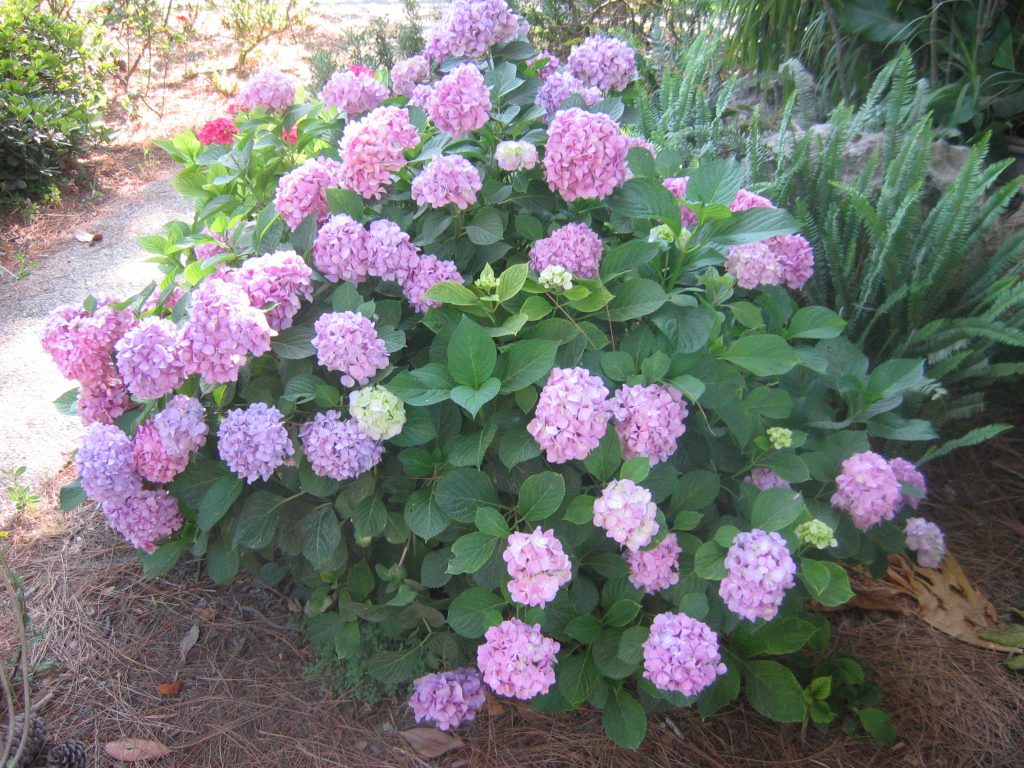
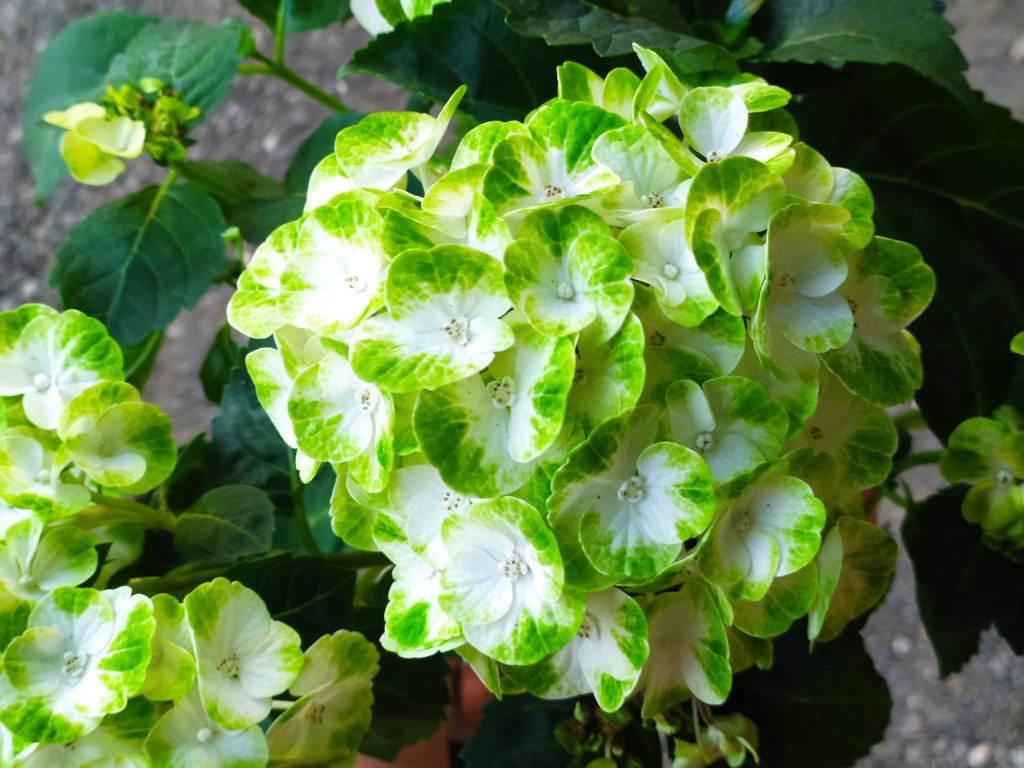
'Common Hydrangea – Hydrangea macrophylla
Do you already have a Purim costume? Not yet??
Perhaps the following plants will inspire you….
Just before the Purim celebrations fill our streets, we went searching among the nursery tables (and in Israeli nature) for the best costume and came back with impressions – so don't miss our special series of articles for Purim, which will be posted on our website and our Facebook page 😏
And now for the plant, which has already started to return to the nursery shelves with an excellent costume:
Hydrangea macrophylla or the common hydrangea is a shrub that comes from cool and humid climates and despite this can be grown successfully in most regions of Israel with abundant irrigation and in soil that does not contain chalk (sand, basalt, potting soil).
The leaves are usually shed in winter and regrow in spring, and the large, rounded inflorescences appear during late spring and summer.
The plant prefers full shade and should be grown in a large pot (it can reach a size of 2X2 m' but in Israel does not normally exceed 1X1 m') or in the garden without root competition of large trees or shrubs. It has to be watered regularly and fertilized well two or three times a year with fertilizer rich in iron.
We are happy to note that despite its pampered image (water, fertilizer, air conditioning in the summer..) with good care, the Common Hydrangea will last for many years.
For enthusiastic pruners – there is no need to prune it every year, but if you decide that you must, do so immediately after flowering in the summer, as the plant blooms on last year's branches.
And where is the disguise? You will be surprised, it has for parts:
- The large flowers we see are actually the flowers' bracts that have turned from green to colorful and disguise as petals.
- In the wild, the inflorescence, containing masses of tiny flowers in the center and a few large flowers around the perimeter, pretends to be one large flower. This is how insects flying overhead see a huge and attractive flower from afar. The cultivars we grow have been cross-bred so that all the flowers become large and impressive.
- Some varieties of the common hydrangea change the color of the flower from pink to blue depending on the acidity of the soil and the presence of aluminum ions; if you bought a plant with purple or bluish flowers, do not be surprised if it blooms pink next year. You can add aluminum sulfate to the soil and preserve the blue color.
- Last but not least, and especially for Purim – the plants you are buying now are imported plants. In March and April, you will find plants that are grown in Israel – all of these were treated with refrigeration, heating and hormones in order to bloom early, and only in May or June will the hydrangeas in our gardens begin to bloom in full glory at their natural time.
So come to the nursery to see these beauties and their costumes!
- Read about Ophris – Bee Orchid on our Facebook page
- Read about Asteraceae (Compositae) on our Facebook page
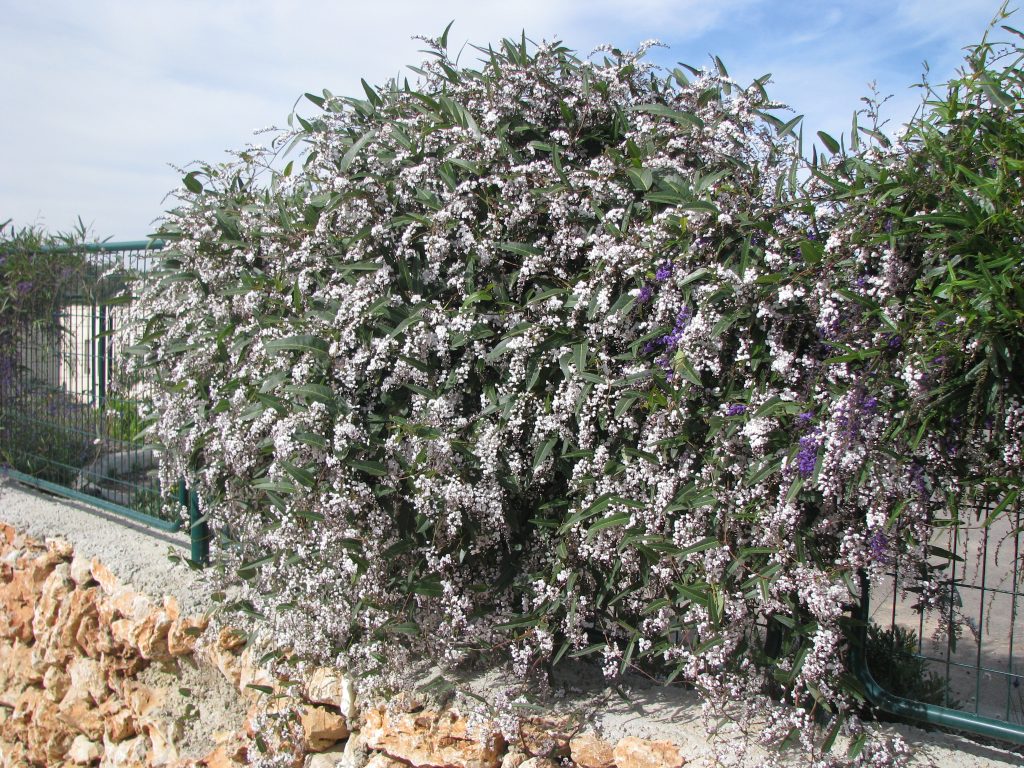
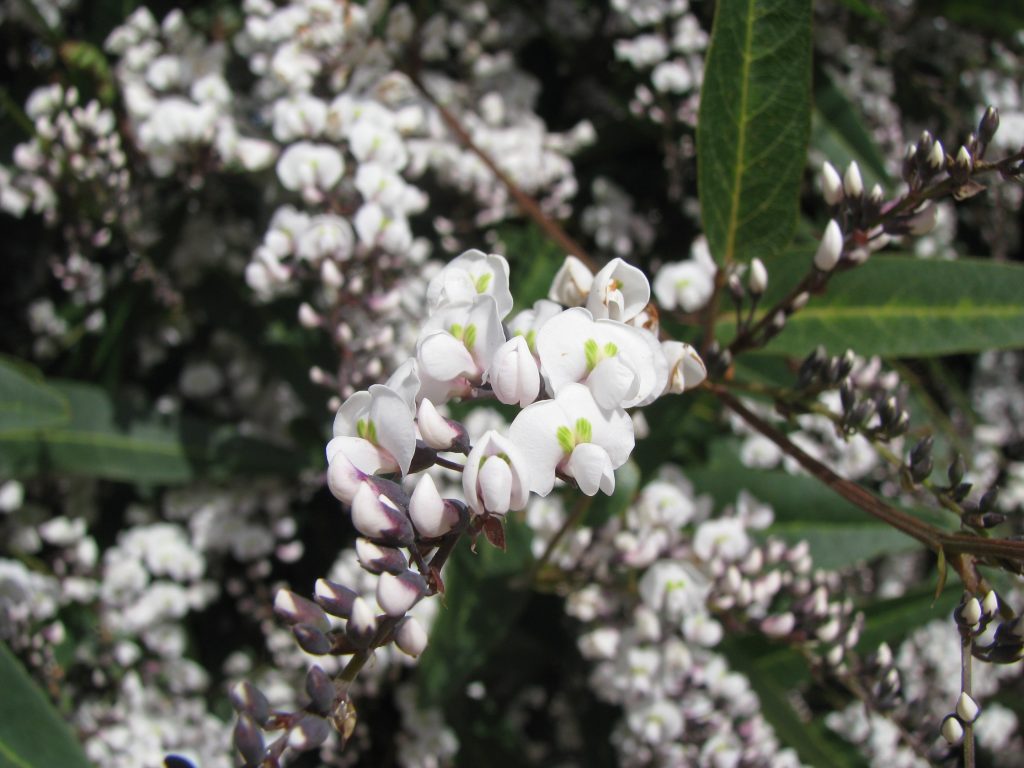
Hardenbergia violacea (and comptoniana)
Many Australian plants have acclimatized to gardening in Israel and thrive in a climate similar to the one they came from. One of the most impressive of these is Hardenbergia – a large, fast-growing evergreen climber with twining branches and dark green, lanceolate or clover-shaped leaves. The plant bears dense clusters of purple or white butterfly flowers, the first buds opening in February and it is completely covered in an enormous abundance of flowers by March or April.
Hardenbergias grow well in all soils and in most areas of the country from partial shade to full sun with regular irrigation. On the coastal plain, it suffers a little in the summer, and fares better if planted in partial sun. One can also combine it on large fences with summer-flowering climbers, thus obtaining a long and varied flowering season.
When mature, Hardenbergias develop good drought resistance.
ניתן לצפות בסרטונים שלנו ולהתעדכן בנעשה במשתלה בעמוד הפייסבוק, באינסטגרם וגם בערוץ היוטיוב שלנו, בו יש כבר כ-200 סרטונים