





The genus Vaccinium of the Heather family contains many species, including various berries, some of which are not known in Israel. Most species require acidic soil and very low temperatures in the winter, so they were difficult to grow in Israel, but over the years, varieties and hybrids have been selected with low cold requirements. These plants can be grown in Israel and even on the coastal plains, as long as they are provided with the appropriate level of acidity in the soil.
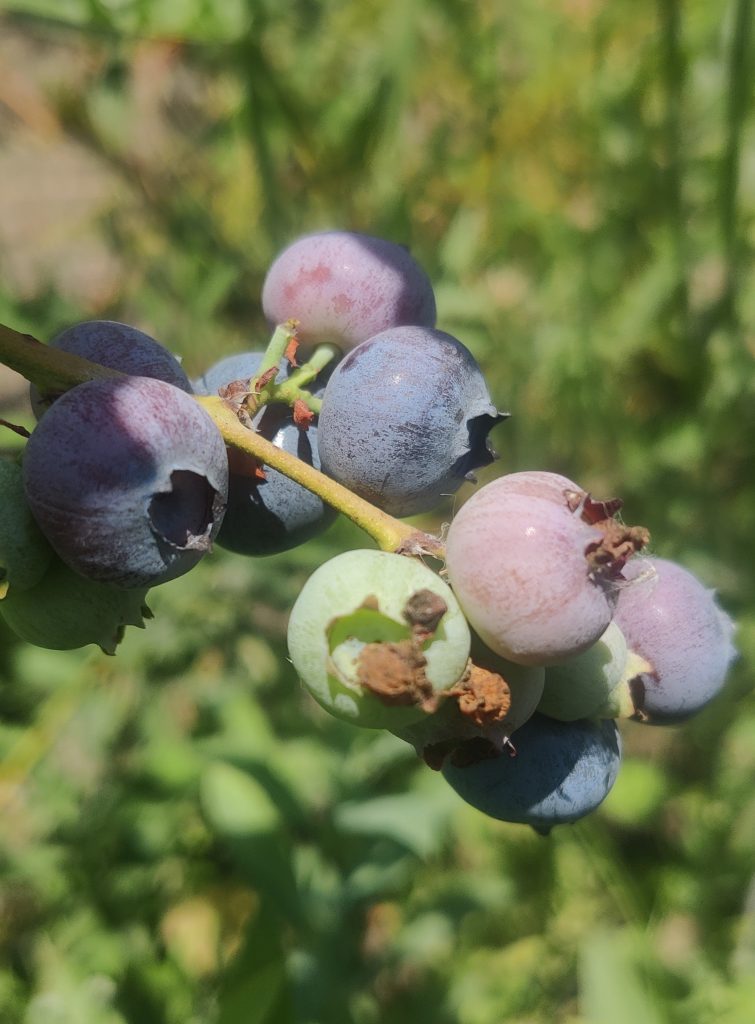
The blueberry fruit contains many antioxidants and is considered extremely healthy, and its unique taste and bluish color are very attractive.
It is interesting to note that the only plant from the blueberry family that is native to Israel is the Arbutus andrachne (Ktalav) tree, which has sweet red-burgundy fruit that dry into delicious raisins. It is a beautiful tree with a red trunk and abundant white flowers that are very similar to those of blueberries.
All the blueberry varieties that we sell prefer to grow in pots of 20-30 liters or more for the smaller varieties and 50 liters or more for the larger varieties. They all like soil that is rich in organic matter and well-drained, with a pH of 5-6 and low salinity. By applying sulfur powder 2-3 times a year and regular watering and fertilizing, you can grow healthy and strong bushes for many years in the same pot.

?How to choose a blueberry variety to grow at home
In recent years, many varieties with low cold requirements have been distributed in Israel, but in our opinion, when choosing a plant for home growing, it is worth taking into consideration additional factors such as final size, sensitivity to suboptimal care, susceptibility to diseases, etc.
Therefore, we will recommend here a small number of varieties, which experience shows are the easiest to grow and thus also the most satisfying and suitable for everyone:
1. Sunshine
2. Ann
3. Gulf Coast
4. Shefa
5. Misti
6. Sharp Blue
Both you and I can grow blueberries
Here are some Important points to consider when buying a Blubbery bush:
- Purchase: Blueberries are slow root growers and it is recommended to verify the nursery's level of responsibility in the event of a failure.
- Planting containers: It is recommended to keep the plant in its original container for a while, especially at the height of summer.
- Acidification and planting substrate: Blueberries must grow in acidic soil. Most soils in Israel are alkaline, and even the acidic ones (such as the basalt of the Golan Heights) sometimes contain a lot of lime and clay, which makes it very difficult to acidify the soil.
- Watering: Blueberries are very sensitive to drying out, but also to excess water in the soil. In the summer, it is recommended to water once a day or two with an amount of about 20% of the volume of the planting soil in the container – for a 10L container, about 2L of water per day, for a 20L container, about 4L of water per day. (If watering once every two days, water a 10L container with about 4L each time).
- Fertilization: We prefer and recommend using slow-release fertilizers such as Osmocote and others that also contain trace elements and release tiny amounts of fertilizer over a long period of time. You should bury the granules under the soil in several places in the pot about twice a year. check the specifications of the fertilizer for the right amounts.
- Sun: All varieties of blueberries can grow in full sun, but if purchased in the summer, it is advisable to initially place them in partial shade and with a maximum of 4-5 hours of direct sunlight.
For for more details on how to successfully grow Blueberries and about each variety, press here

It’s a beautiful day, the sun is shining and the temperature is pleasant. As usual, you want to work in the garden and pop over to your favorite nursery, pick out some new plants and head straight home to plant them. On the way home, you remember a few small errands and a little shopping, which only take an hour or two. To your surprise, when you get home, the lovely plants you bought don’t look good anymore. Some of them look really awful with drooping leaves and flowers and even burn marks on a few leaves.
?You ask yourself, what happened
We all know that leaving children or animals in a hot car for a long time can be extremely dangerous. We can’t forget about plants either – they can also suffer from sunburn and heat damage.
Did you know that a car parked in the sun can heat up by about 10 degrees Celsius in 10 minutes and go from 30 degrees to 50 degrees in 30 minutes with the windows closed?!
Intense heat can have a rapid and severe detrimental effect on plants. High temperatures can cause flowers, leaves, stems, and fruits to dry out quickly, leading to wilting of leaves and stems and significant damage to the entire plant.
Direct sunlight on shade plants and houseplants, which are not used to it, can also cause damage and burns, even on a few-minute drive with air conditioning!
In addition to this damage, wind damage can also occur when transporting plants in an open trunk, or with the windows wide open.
?So, what can be done to prevent such damage
- To prevent heatstroke, park the car in the shade or turn on the air conditioner as if people were sitting in the car. A closed trunk will usually heat up more slowly than a car interior surrounded by windows – the plants there will usually be less damaged.
If there is some damage – In sensitive plants, damage is usually visible within minutes. The plants should be placed in a shady, cool place.
Water immediately and then drain them well. You should monitor the plant daily and see if it recovers. - To prevent radiation damage, it is imperative to place the plants in a place in the car where direct radiation will not reach them!
In sensitive plants, radiation burns will be visible immediately, or within a few hours to a day. In such a case, the upper leaves or those that were on the sunny side and were exposed to the sun are the ones most damaged. Severely damaged leaves should be pruned and the plants placed in a shady, cool place. Water immediately, but without exaggeration if the planting medium is dry. You should monitor the plant daily and see if it recovers. - To protect plants from wind damage, they should be laid in the open trunk, or tied and wrapped, and windows should be at least partly closed when transporting inside the car.
In sensitive plants, damage is usually visible immediately, but sometimes only after a few days. The plant should be planted in its destined location, ensuring proper watering. Monitor until recovery. If many leaves are damaged, it is worth considering temporarily placing the plant in a relatively shady place to prevent damage from excessive radiation, even with sun-loving plants. After recovery the plant can be planted out.
:Similar dangers exist in winter as well
On warm, sunny days, even in winter, plants may suffer from the problems listed above.
The treatment is similar to summer treatment.
On cold days, especially in the mountain area, plants that are sensitive to cold may suffer from frostbite if left in a car for several hours.
Get the plant quickly to a warm place and monitor the damage – prune damaged leaves or parts of leaves and be extra careful about overwatering.
Please note that the taking care of the plants you bought begins the moment you leave the nursery, and you should make sure that they are not damaged even on your way home!
Good Luck!