




The leaves will almost always be green, and this is also the dominant color in most forests, meadows, and gardens around the world.
But if we walk around arid regions, even in a Mediterranean climate similar to ours and certainly in desert regions, we will discover that green plants often give way to plants with small, grayish leaves.
This phenomenon is explained by the defense mechanisms of plants and their coping with intense radiation and extreme dryness. Under these conditions, many plants cover their leaves with a grayish wax layer that protects them from radiation and water loss, and others grow dense hairs on their leaves that turn their color gray or whitish and greatly reduce the amount of radiation that hits them and the evaporation of water from them.
Such small, dense leaves also shade each other, and the plant can also sacrifice its outer leaves to protect the rest of the leaves.
Among plants growing in dry climates, there are even some that shed most of their leaves in the summer and return to bloom only with the first rains.
All this is in contrast to the large, dark green leaves common in plants growing under trees in temperate and tropical regions. These try to hunt for every ray of light that slips through the treetops and in any case rarely encounter a shortage of water.
With the arrival of the summer heat waves, we chose to write about a few plants that have whitish or silvery leaves and look their best in the summer.
Here we have written about only two of these, but on our Facebook page and website, you can read about many more.
Teucrium capitatum - Common Germander
Common Germander is as its name suggests; you can find it growing naturally in all the hills of Israel from Mount Hermon, through the Galilee, the northern valleys and mount Carmel, the central mountain range, the coastal plain and through the Jordan river valley to the mountains of Eilat.
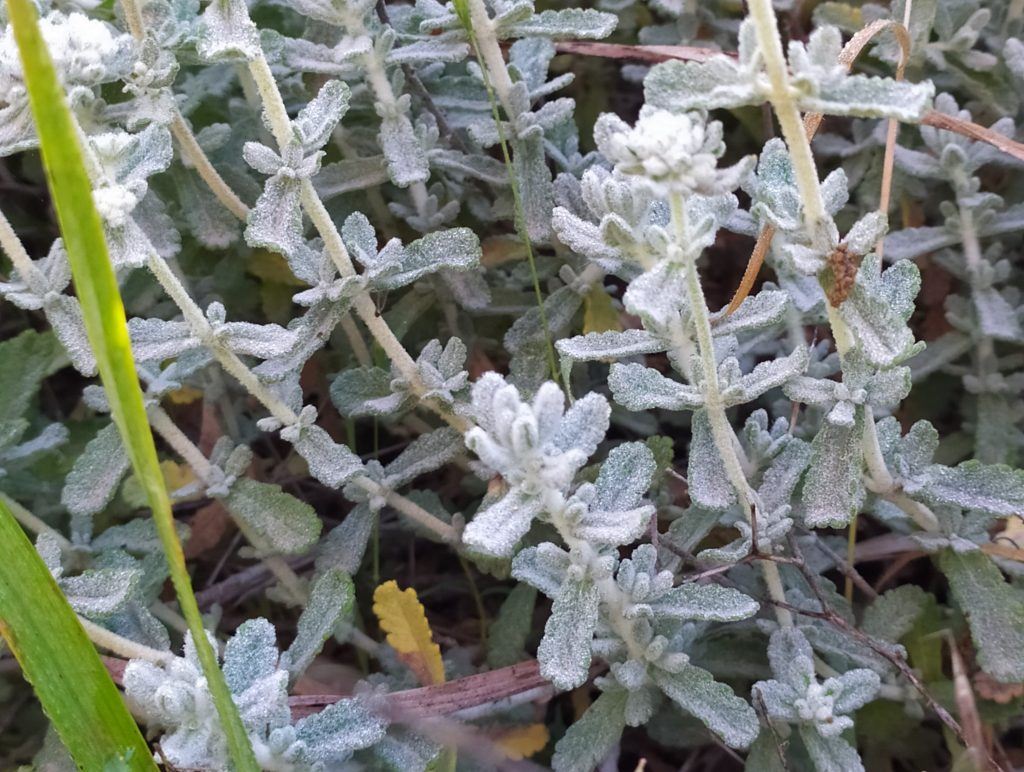
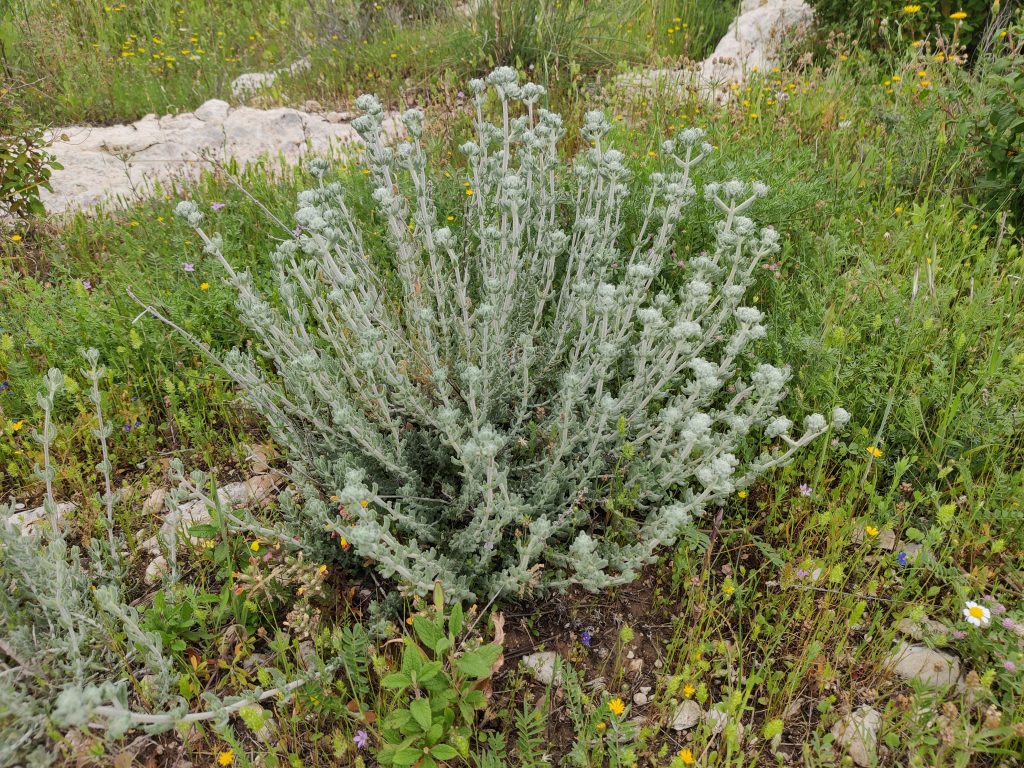
This is a small shrub that usually forms a low, wide cushion of small, soft leaves that are slightly serrated and covered with a whitish down that is pleasant to the touch.
In Israel, and especially in its drier and warmer regions, the plant tends to dry out partially or almost completely during the summer and bloom again with the winter rains. It is therefore advisable to combine it in the garden with summer-active plants and enjoy its whitish, pleasant and modest appearance from mid-winter to mid-summer.
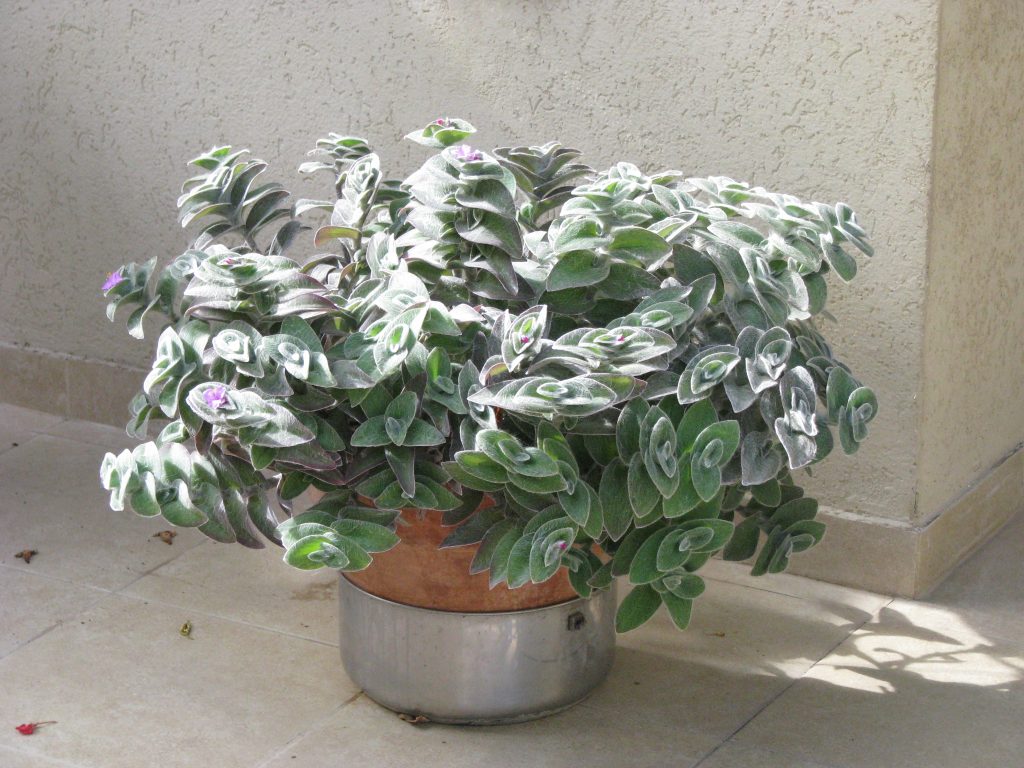
Tradescantia sillamontana - White Velvet Plant, Hairy Wandering-Jew
Chair Mountain (Cerro de la Silla in Spanish), whose two pointed cliffs at its top resemble a saddle, is the prominent symbol of the city of Monterrey, located in the state of Sierra Leone in northeastern Mexico. This area has a hot and semi-arid climate, with temperatures reminiscent of those of Beersheba and a similar amount of precipitation to that of West Jerusalem (about 600 mm per year), which is concentrated in the summer months.
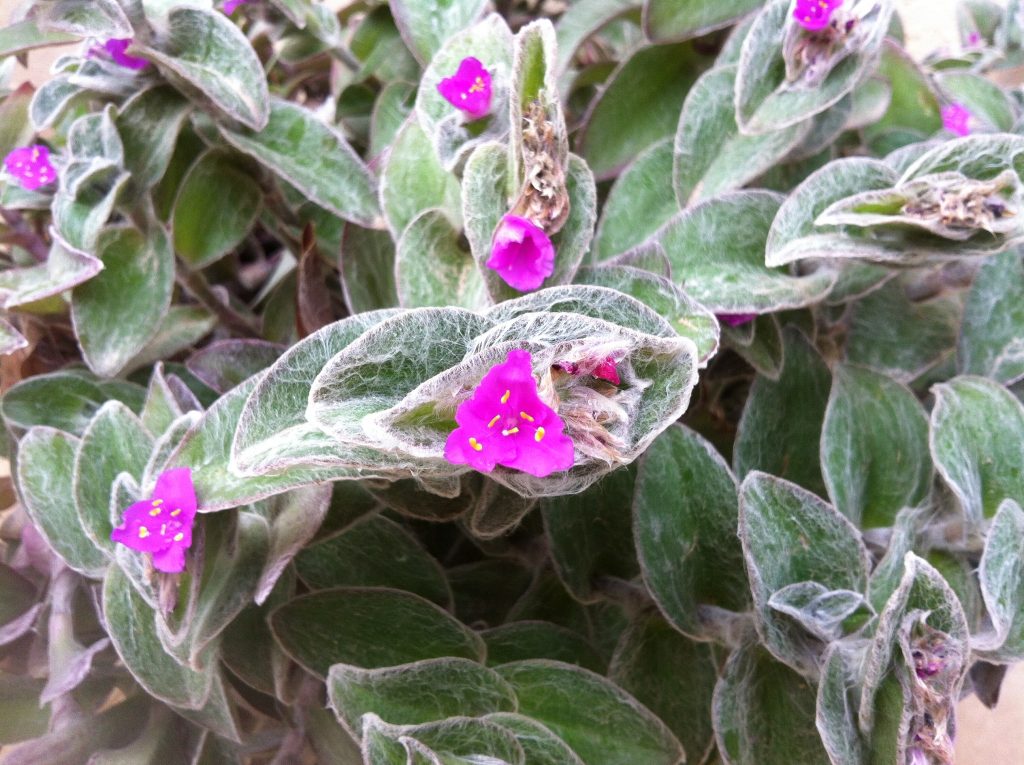
Hairy Wandering Jew loves heat and partial sun, but also does well in partial shade and almost full shade. In warm areas of the country, it can be grown in well-drained soil in the garden and in containers, even small ones, without any worries.
In conditions of almost full shade, the hairs covering the leaves diminish and the plant becomes greener and has a tendency to spread out more, and then it can also be planted in hanging baskets.
One can water it regularly in the summer, while maintaining excellent drainage, but thanks to its fleshy leaves and stems, it is extremely resistant to drought.

Our August's Garden
Everyone knows that with the beginning of summer, the beaches of Israel are filled with jellyfish, which plague vacationers at sea and our gardens are filled with mosquitoes, which breed and bother us all.
Unfortunately, there is not a single plant that really repels mosquitoes; These are attracted to us and to even tiny water reservoirs, where stinging female mosquitoes lay their eggs.
The Asian tiger mosquito (day mosquito) can grow in tiny containers and water pools and it is advisable to make sure that there is no standing water in your or your neighbors' garden.
If you empty such small pools like pot saucers or animal water containers once every three to four days, you can prevent the development of mosquitoes.
This rule is also true for all lovers of plant cuttings and it is recommended to go over your water jars every few days to make sure no larvae develop in them.
And what can still be done:
You can also extract oil from plants that contain fragrant essential oils such as plectranthus, spicy and lemony pelargoniums or rosemary and alternatively rub their leaves on your skin.
Summer watering:
The month of July is one of the main summer months and the summer routine begins: regular and consistent watering according to the requirements of the plants and especially when new plantings are done.
We remind you that each plant has a different requirement and watering in the ground must be distinguished from watering in a container.
In order to perform the irrigation in the most efficient and economical way, we recommend connecting the irrigation system to a computer with at least 2 different irrigation programs.
Planting:
It is recommended not to plant heat-sensitive plants in the height of summer. With shade plants one can be less strict, since these do not heat up and suffer from direct sunlight.
Fortunately, there are many heat-loving plants in the nurseries and as long as you make sure to water regularly in the first months, there is no obstacle to planting citrus trees, bougainvilleas, leucophyllum varieties, russelia, loropetalum, caesalpinia and many other plants that celebrate the summer heat.
:Pruning and mowing
With the heat comes laziness, but it must be remembered that the routine of working in the garden continues and one must continue to mow grass as often as desired and prune bushes and other heat-loving plants according to their development.
:Pests and disease:
Trees from the rose family such as apples, peaches, plums, pears, cherries and others tend to suffer in Israel from various pests, among them trunk pests that lay eggs in the trunk and create burrows in it (acorn beetles of various kinds, bark beetles, moth species, etc.).
Trees that are not watered well are more sensitive to various pests and it is better to water them deeply in large quantities every few days. It is also recommended to check the tree trunks every few weeks for early detection of problems.
In the vegetable garden, you can observe a common disease: Mildew – a white fungus that develops on the leaves of plants from the cucumber family (cucumbers, watermelons, zucchini, etc.). One of the ways to deal with this phenomenon is to irrigate the soil and avoid watering with a hose that wets the leaves.
In addition, you can try to spray the lightly infected leaves with baking soda mixed with water, which inhibits the development of downy mildew.
ניתן לצפות בסרטונים שלנו ולהתעדכן בנעשה במשתלה בעמוד הפייסבוק, באינסטגרם וגם בערוץ היוטיוב שלנו, בו יש כבר למעלה מ-100 סרטונים