The Almond Tree
Amygdalus communis, Prunus amygdalus
Family: Rosaceae | Origin: Transcaucasus
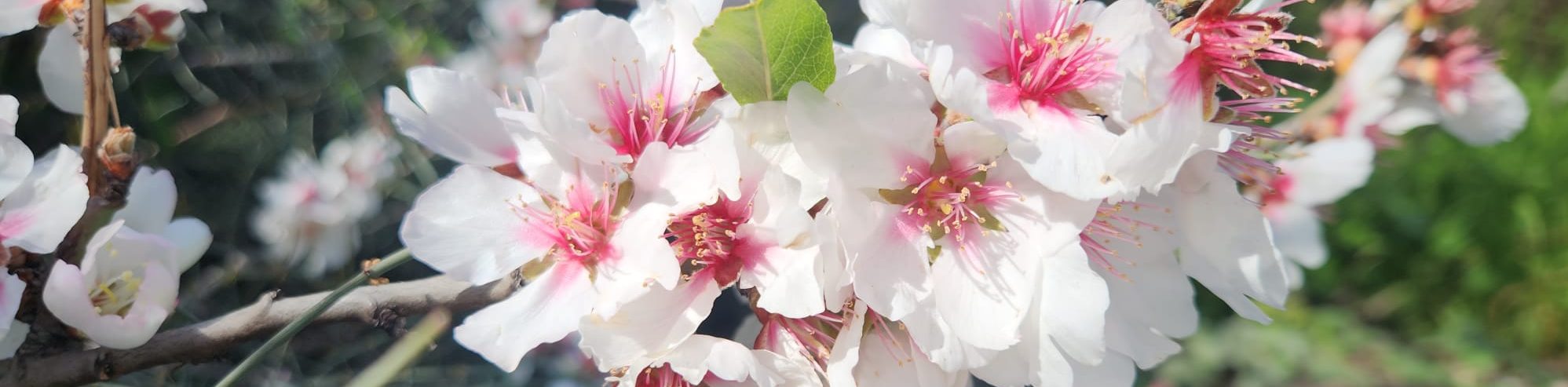
In Israel, Tu Bishvat is the Festival of Trees, but if you ask children which tree is most associated with the holiday, it is the almond tree, which stars in the main Tu BiShvat poem: "The almond blossoms and the golden sun shines"…
Abroad, mainly in the United States and for commercial reasons, The International Almond Day is celebrated on the very near date of February 16 (yes, such a day does exist).
There is no doubt that this time of year is a wonderful opportunity to talk about one of our beautiful trees, which is now in full bloom in the Israeli nature and which brings so much joy to those who see it.
The tree originated in Transcaucasia, which includes northern Iran, northern Turkey, Georgia, Armenia and Azerbaijan, where it was probably first cultivated thousands of years ago. The rare varieties with sweet fruits were distributed to other regions and were probably brought to Israel thousands of years ago.
It is very easy to germinate the almond from seeds and very difficult to propagate it from cuttings, hence the sweet edible varieties were grafted on seed stock, and so they are sold to this day as grafted trees.
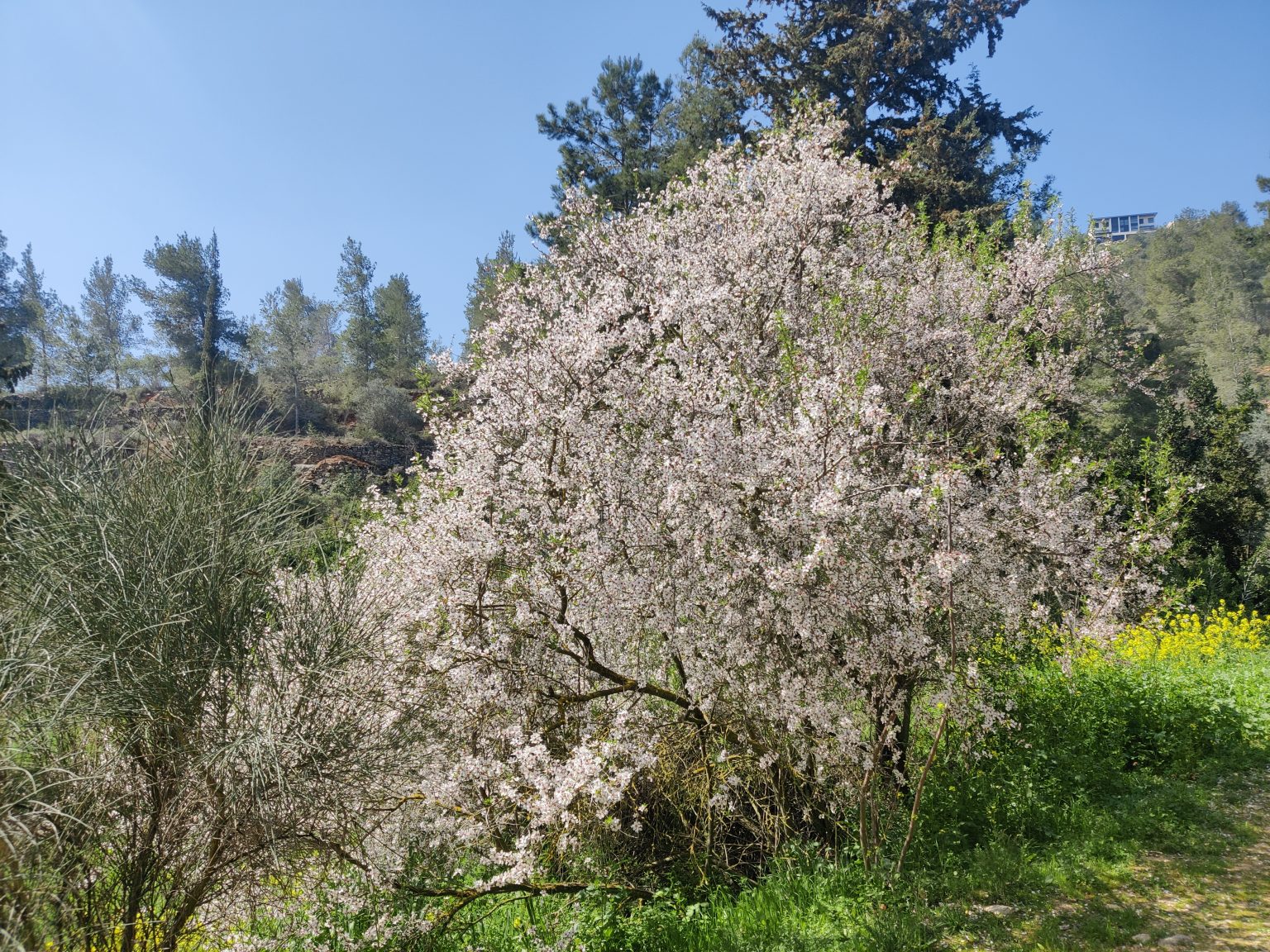
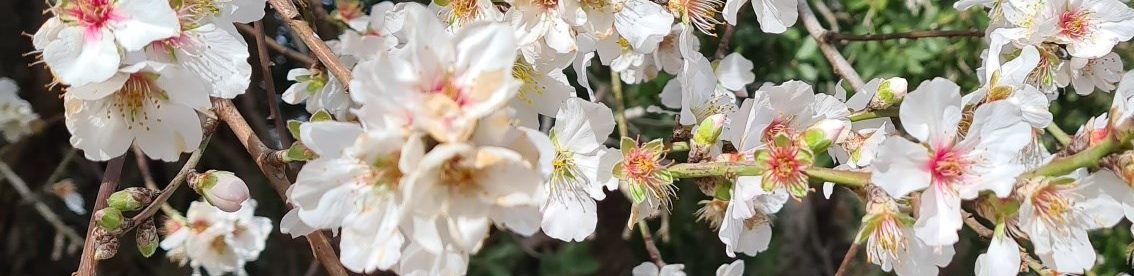
The trees that we see in nature are all cultural refugees, which sprouted spontaneously from seeds or are remnants of ancient plantations, and therefore there is also great variation in the shape and color of the flowers. Unfortunately, almost all of them bear bitter fruit.
Unlike most other Rosaceae, the almond is relatively durable and can live a long time. Although it is sometimes attacked by trunk borers, its ability to grow additional trunks and even regenerate from the roots allows it to have a reasonable longevity – such regeneration from the bottom of the trunk or from a root preserves the base of the tree that belongs to the bitter almond and loses the grafted sweet almond, which is why most old trees are also bitter.
We recommend monitoring the tree regularly, to detect pests and prevent problems.
It is recommended to plant the almond from autumn to late spring. At the height of summer, the trees are partially dormant, and then their establishment is more difficult.
?And what do we eat in almonds
When we eat almonds, we are actually eating the seeds of the tree – the seed is wrapped in a fruit that is shaped like a hard brown shell that protects it, but before it ripens, when the almonds are green, they are often eaten along with the flesh that surrounds the seed and is pleasantly sour.

Bitter almond seeds contain cyanide, which is released when eaten, and are therefore not good for eating. Cyanide is part of the seed's defense mechanism and can also be found in other plants (apple and peach seeds, the roots of the cassava plant, etc.).
In addition to the seeds, the flowers are also edible and can be added as a garnish to a salad or used to make a fragrant, delicious floral tea.
לקריאה על שקד מצוי בעברית לחצו כאן