Tradescantia sillamontana
White Velvet Plant, Hairy Wandering-Jew
Family: Commelinaceae | Origin: Northern Mexico
Chair Mountain (Cerro de la Silla in Spanish), whose two pointed cliffs at its top resemble a saddle, is the prominent symbol of the city of Monterrey, located in the state of Sierra Leone in northeastern Mexico. This area has a hot and semi-arid climate, with temperatures reminiscent of those of Beersheba and a similar amount of precipitation to that of West Jerusalem (about 600 mm per year), which is concentrated in the summer months.
From this climate, migrated to us the White Velvet Plant, which is one of the most succulent and drought tolerant plants in the wandering Jew genus.
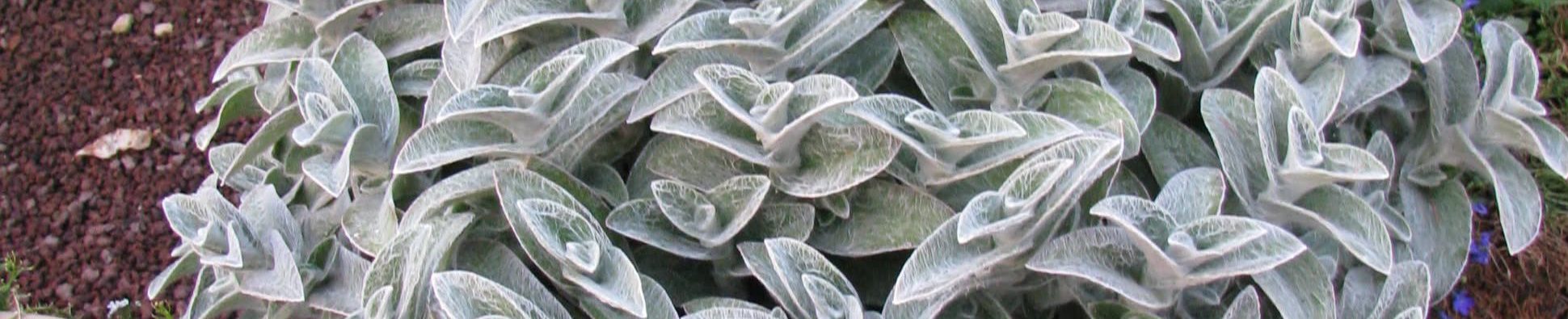
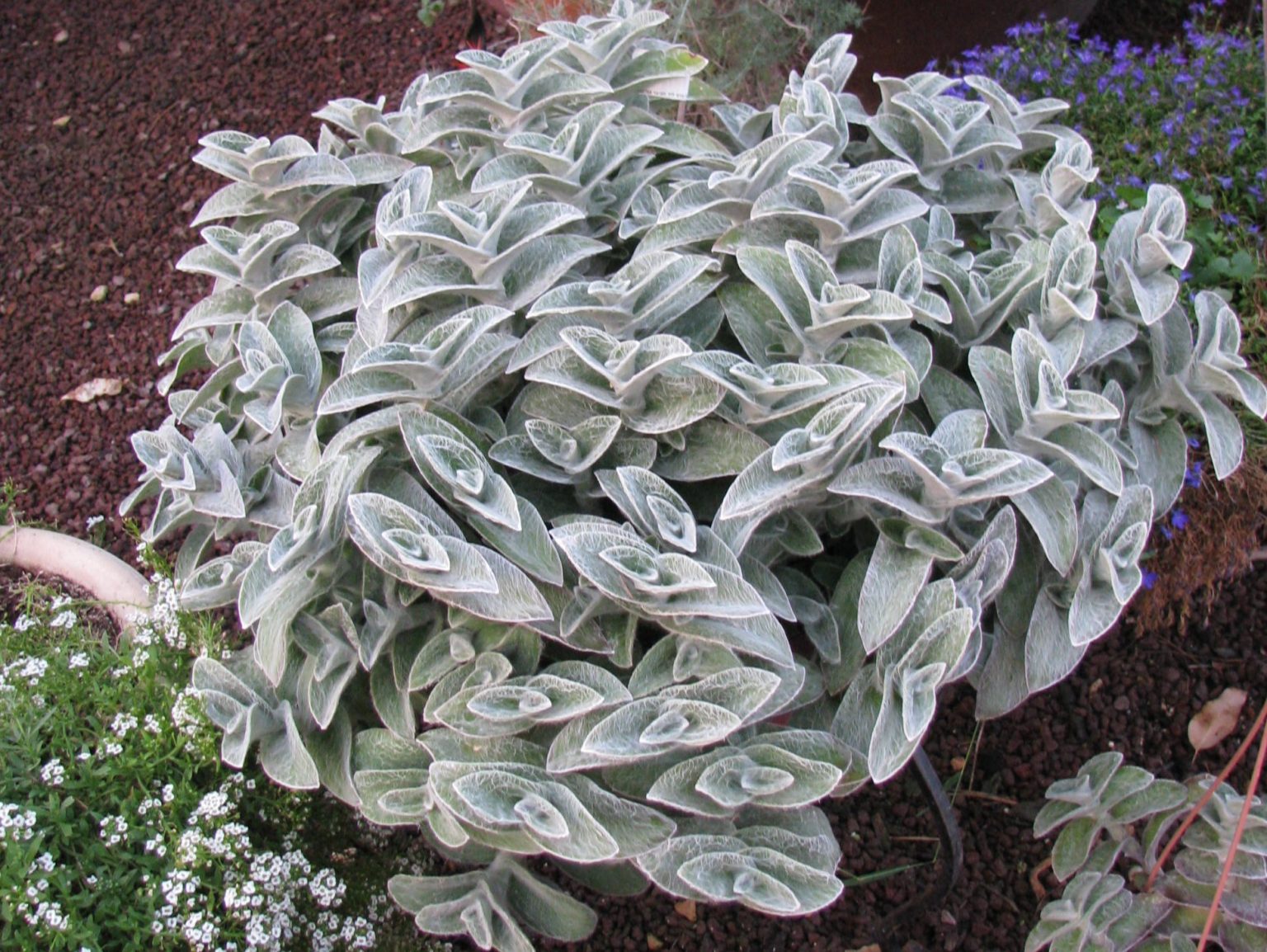
This is a semi-spreading plant with fleshy, lanceolate leaves arranged very symmetrically on both sides of the dense stems.
When it fills out, the outer stems spread out slightly and the plant can reach a height of 30 cm and a diameter of 40-50 cm.
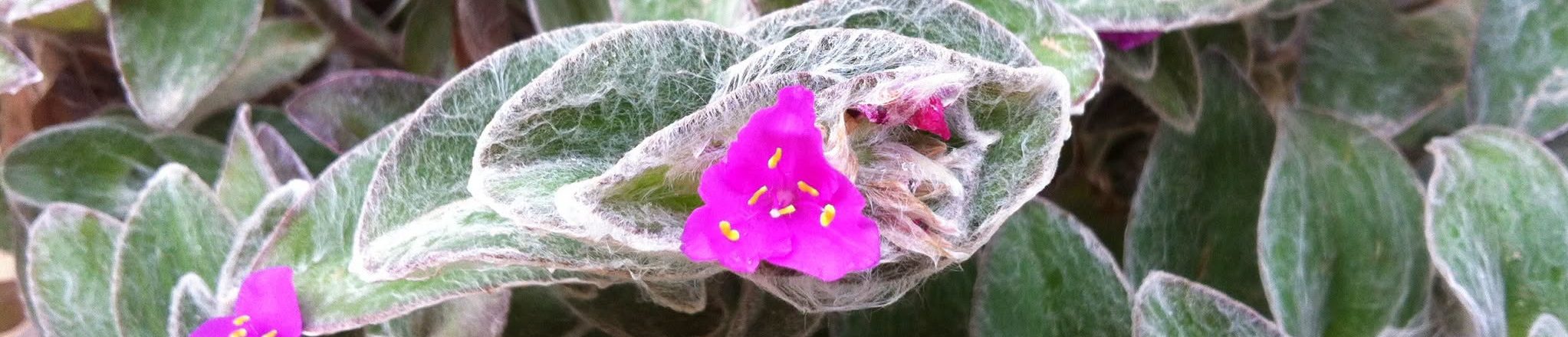
To better cope with dryness and radiation, the plant grows, when exposed to a few hours of sunlight, an abundance of dense white hairs that give it (under optimal conditions) a completely white appearance and reflect the sun's radiation.
From late spring and sometimes until late summer, bright pink triangle flowers emerge alternately from the ends of the stems.
Hairy Wandering Jew loves heat and partial sun, but also does well in partial shade and almost full shade. In warm areas of the country, it can be grown in well-drained soil in the garden and in containers, even small ones, without any worries.
In the mountain regions, it should be protected from the combination of cold and humidity, to which it is not accustomed, and should be kept fairly dry in winter under a roof or another reasonable protection.
In conditions of almost full shade, the hairs covering the leaves diminish and the plant becomes greener and has a tendency to spread out more, and then it can also be planted in hanging baskets.
One can water it regularly in the summer, while maintaining excellent drainage, but thanks to its fleshy leaves and stems, it is extremely resistant to drought.
The plant responds well, but slowly, to pruning and can be renewed by pruning if it is damaged in the winter or if you want to reduce it.
As mentioned before, this is an excellent plant for containers, also suitable for planting in rockeries and in the garden in well drained soils.
Its symmetrical structure and impressive color allow it to be used as a single sculpture in neat and formal landscaping as well as in combination with other succulent plants in the cactus garden.
This is a great plant for desert areas and other hot areas of the country (i.e. almost the entire country..) that also succeeds beautifully in the high mountains with a little more attention.