



?Did you know
Super Lang Ltd. was established in 1995 as a professional center that offers all the solutions for private garden owners, gardeners and institutions.
Today, the store contains a wide variety of tools, clothing, footwear and everything you need for pleasant, professional and safe work environment.
In addition, the store holds camping and outdoor equipment as well.
As part of Super Lang's professional service, it opened the 'Workshop' – a repair center for all motorized and electric gardening tools – from saws to lawn mowers.
So if you haven't visited yet, now is the time – the store is located inside the nursery!
We hope to see you soon.


Everything You Need to Know About the Window Sill
The window sill holds a place of honor among houseplants – it is usually the place with the most light and small houseplants fit in perfectly there.
But when you examine the subject in depth, you sometimes discover that the relationship between houseplants and the window sill is a love-hate relationship.
It can be very hot near a window in the summer and very cold in the winter, and intense and prolonged sunlight is harmful to many plants.
Windows that receive direct sunlight during the hot hours of the day in the summer are mainly suitable for succulents (cacti and other succulent plants). Most of these plants cope well with the intense radiation and the high heat generated near the window. Other houseplants, even those that require a lot of light, are better kept a little further away from such windows.
If you have a double window sill outside the window and on the inside, you can place sturdy succulents on the outer sill, which will also filter the sunlight that penetrates and allow for the placement of delicate houseplants on the inside.
Windows with a north-facing orientation, or those where most of the direct radiation is blocked by nearby trees or buildings, are more suitable for regular tropical houseplants.
In this case, it is worth being aware of another minor problem – glass cools easily and quickly and is usually not perfectly insulated. Moreover, a stone or marble window sill cools quickly and transmits cold very easily into the house. Plants placed on a window sill in the Jerusalem area may actually experience temperatures much lower than those we feel at home and may even suffer from it. This problem is easily solved if you place a cloth or a wooden surface or any other insulating element under the pot.
You can, however, take advantage of the colder temperatures on the windowsill in winter to grow plants that love coolness – at the top of the list are, of course, cyclamens, which will thrive with a few degrees less and their flowering will last much longer. You can also try primroses, which generally fail in the heat of the house or Christmas cactus, which blooms better in the cooler spots. Flowering bulbs, like hyacinth and narcissus will also flower longer in such conditions.
Those of you who like to grow plants from cuttings placed in jars with water on the windowsill – the cold does not encourage root growth and these prefer lukewarm water. It is highly recommended to place the jar on a piece of polystyrene or a small wooden surface for separation and insulation.
the windowsill is, therefore, an excellent place for small houseplants, especially if you consider the specific conditions such as light and temperature and do not forget that these can change throughout the year.
Tu Bishvat has arrived, the Holiday of Trees
Tu Bishvat, the New Year's Day of Trees, began not as a holiday, but as one of the bureaucratic New Year's days related to the observance of the mitzvot that depend on the land. Tu Bishvat is the day that separates the fruits of the previous year from the fruits of the new year, and this has implications for many mitzvot.
In the 11th-12th centuries, there are already first references to certain holiday customs on this day, and later it became a holiday celebrated by Jews all over the world in eating fruits and dried fruits and also in reciting the Tu Bishvat Seder.
And what about planting trees?
This waited until the beginning of the 20th century to be linked and connected to the ancient Hebrew date, which was already called Rosh Hashanah of Trees and which was probably considered climatically appropriate for this in the Holy Land.
Is that really so!?
In Israel, most of the rain falls in the months of December-February. A cool November is a common occurrence, but during December there is almost always significant rainfall. This is also the recommended and more convenient time, when the ground is already wet but the cold is not intense, for planting plants and shrubs that are not sensitive to cold. Most of our wild plants and garden plants from Mediterranean climates and of course the cold-loving deciduous fruit trees belong to this group. These plants will establish and sometimes even continue to grow in our mild and wet winter and will arrive in summer strengthened.
For the full article press here
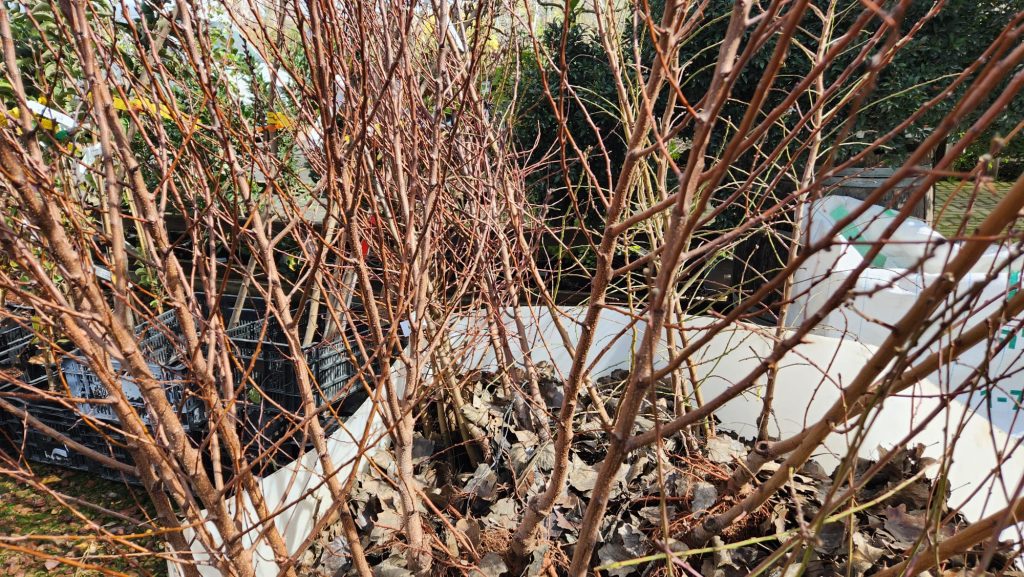
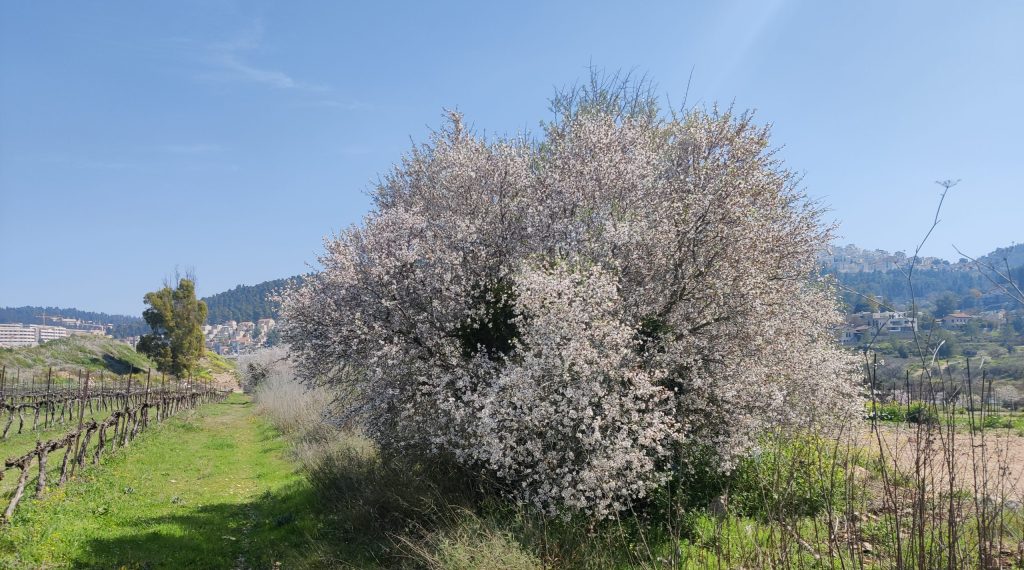
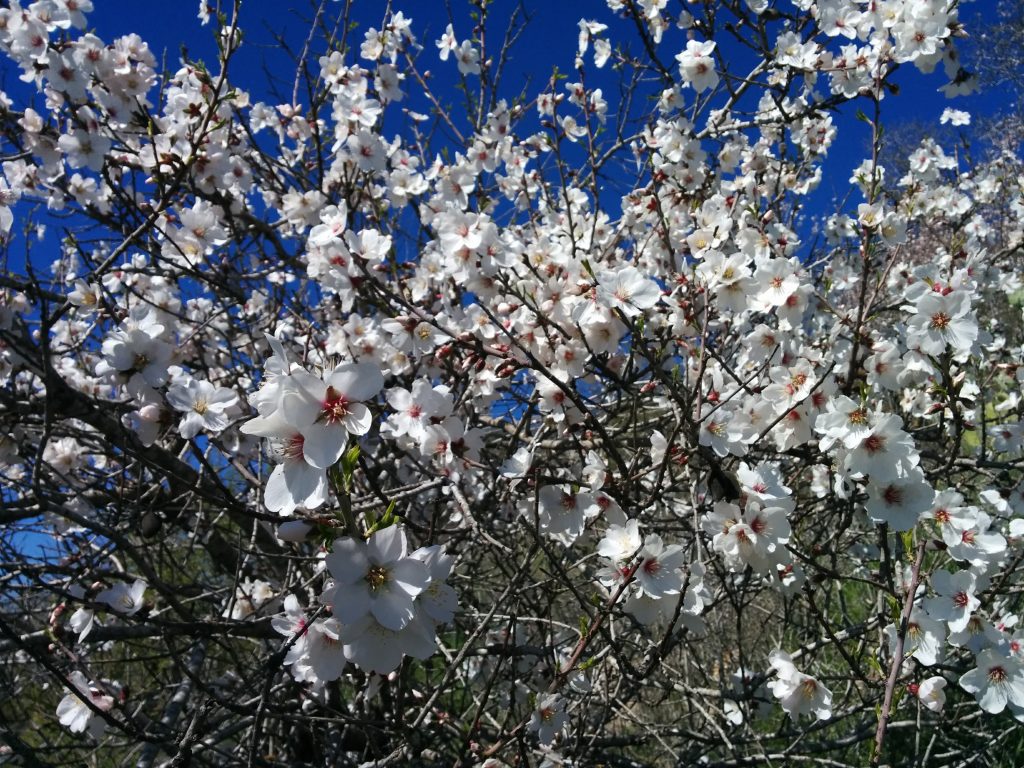
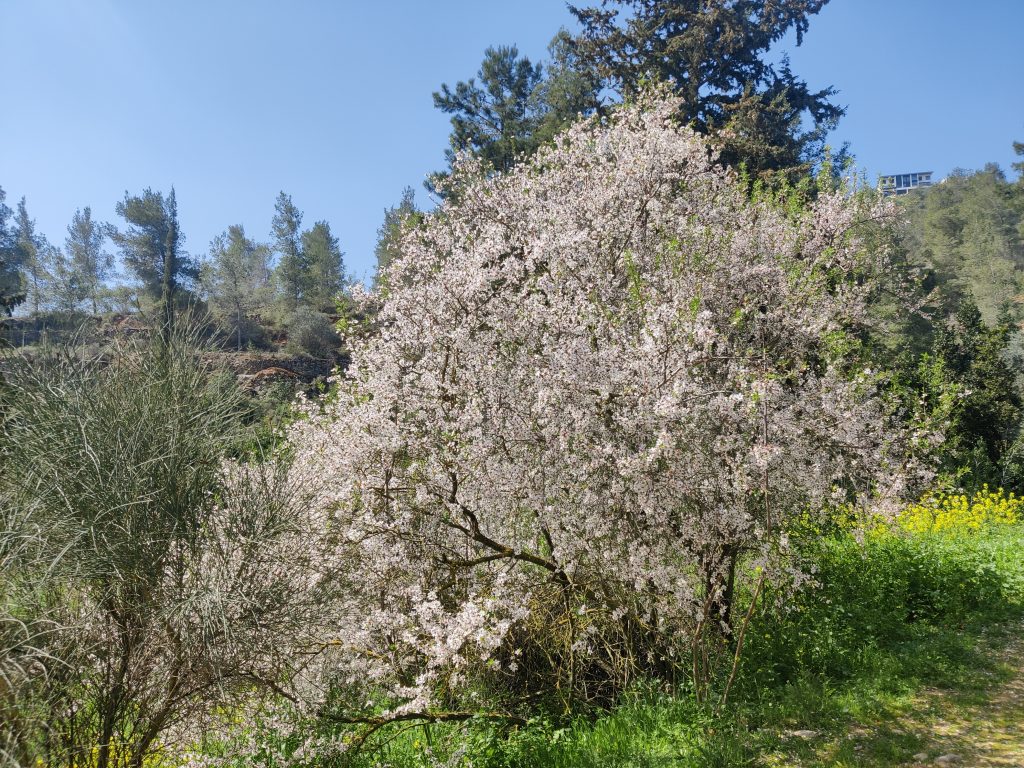
The Almond Tree
Amygdalus communis, Prunus amygdalus
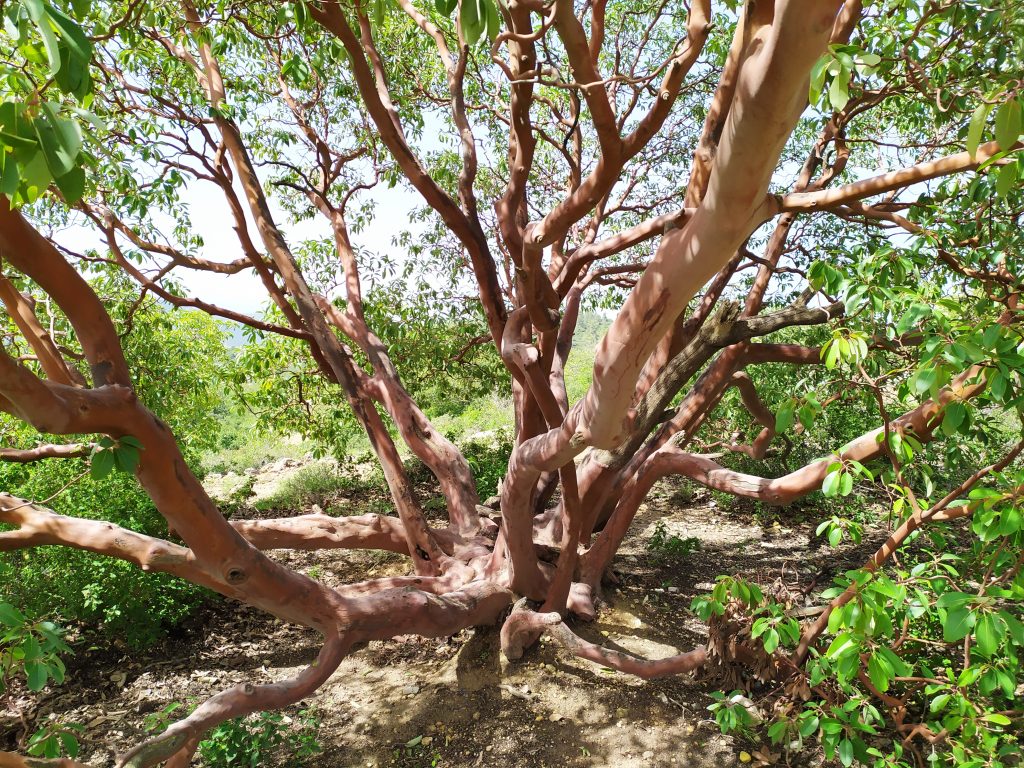
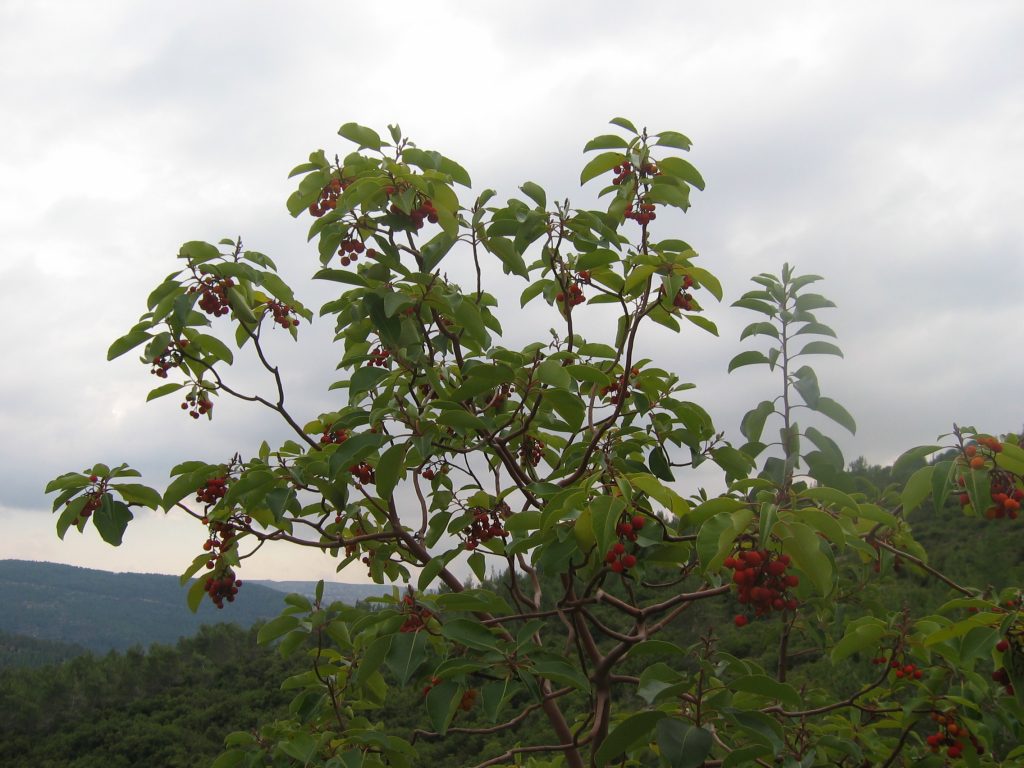
Arbutus andrachne
(Eastern Strawberry Tree)
Arbutus andrachne is undoubtedly one of the most beautiful wild trees in Israel and is familiar to anyone who travels in the Judean Mountains, Carmel and the the Galilee. It is a small tree (6 x 6 meters at maturity after many years and there are also a few larger trees), with Large, shiny leaves, smooth and beautiful red trunks and small red berries that are delicious to birds and humans.
The tree grows well in full sun and full shade and is resistant to the cold and winds of the mountain region.
In nature, this tree grows in basic soils with poor drainage and high water retention, and thus survives the long, dry summer. It is helped by mycorrhizal fungi that live with it in symbiosis and provide it with minerals in these special soil conditions.
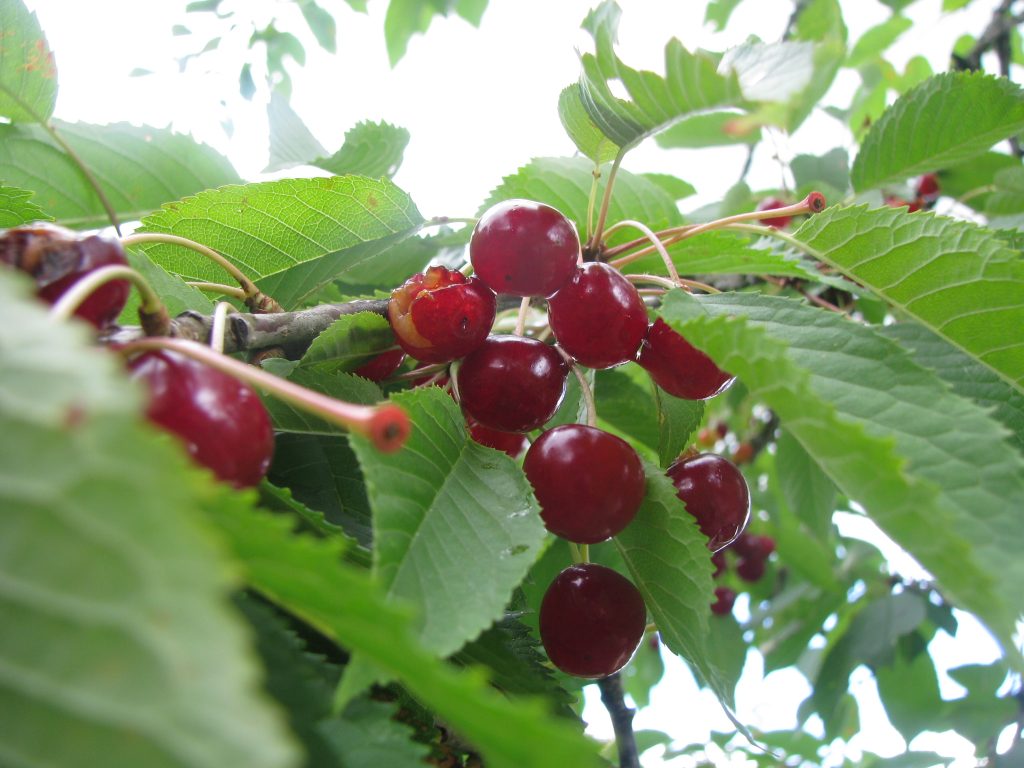
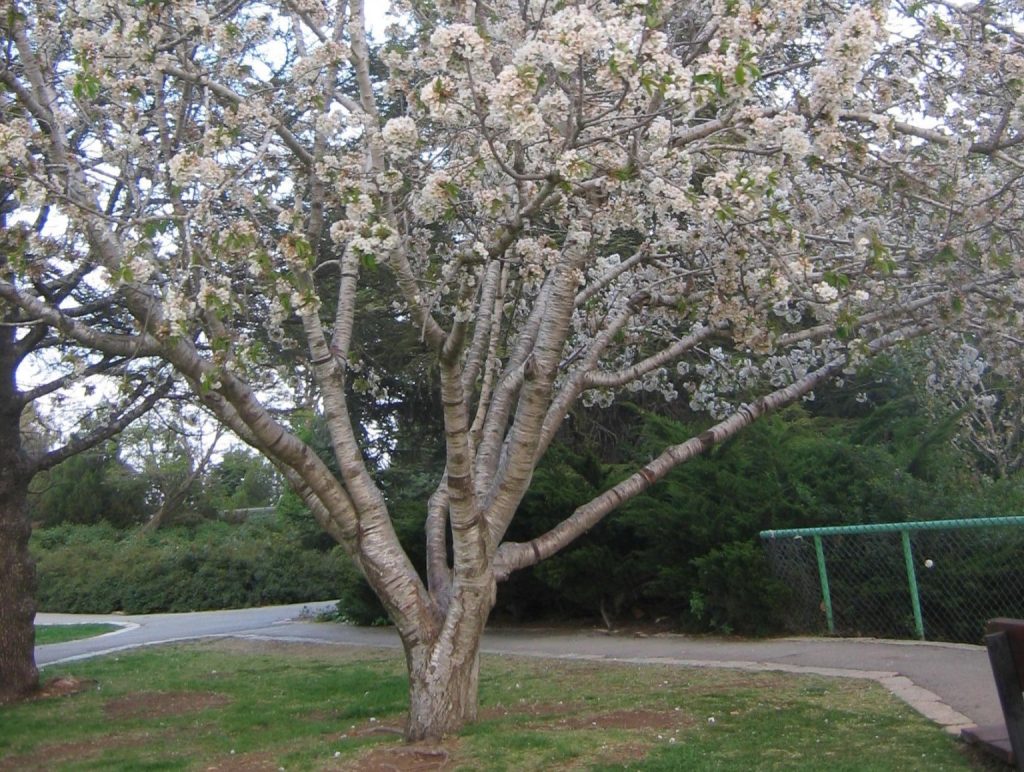
Sweet Cherry
Prunus avium
ניתן לצפות בסרטונים שלנו ולהתעדכן בנעשה במשתלה בעמוד הפייסבוק, באינסטגרם וגם בערוץ היוטיוב שלנו, בו יש כבר כ-200 סרטונים