Sweet Cherry
Prunus avium- Sweet Cherry English
Family: Rosaceae | Origin: Europe, Asia and North Africa
Sweet cherry trees, have a characteristic known as self-incompatibility: a single tree does not fertilize itself. Moreover, varieties belonging to the same genetic group will not fertilize each other. Therefore, many studies have been conducted to test the compatibility of fertilization between varieties, and in commercial orchards, trees of a good fertilizer variety are planted among trees of the desired variety (with desired characteristics such as high quality flavor, fruit size, fruit color, abundant harvest or harvest season). There are fertilization tables for many varieties, according to which it is possible to choose pairs of trees that will fertilize each other well in the garden.
Over the years, varieties with good self-compatibility and self-fertilization have also been found. These varieties produce fruit even without the presence of other trees, but even they will be more fertile in the presence of a fertilizing variety.
Fertilization between different trees and even between flowers on the same tree occurs with the help of bees. Please remember this, love and respect the bees and avoid using toxic substances that are dangerous to bees in the garden!
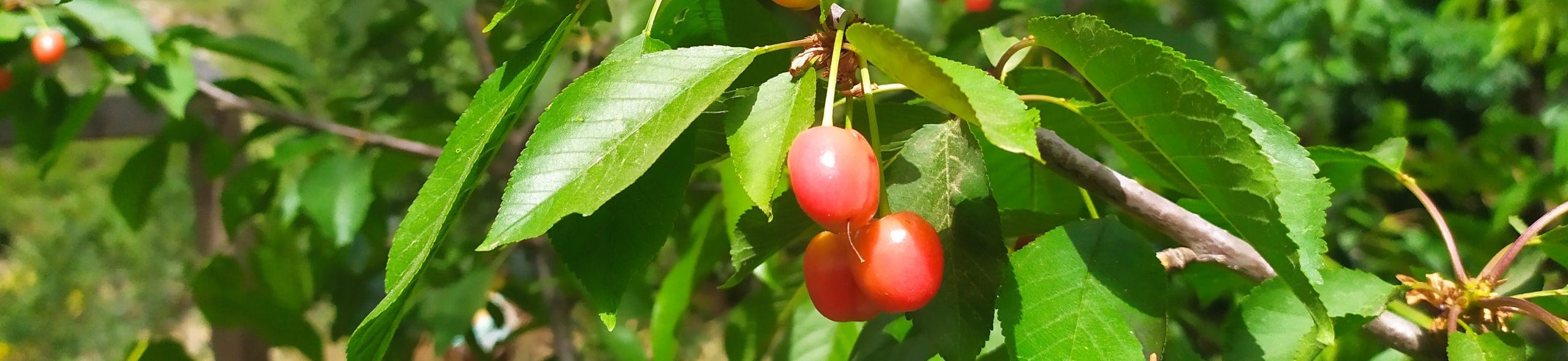
The relatively new variety '17H', which probably also has the ability to self-fertilize, is considered to have a low requirement for cold and can produce a reasonable amount of fruit even at an altitude of 200 meters above sea level! It is a very fertile variety with very tasty small fruit.
Cherries prefer to grow in good soil under full sun and regular irrigation. Like their relatives, the fruit trees of the Rosaceae family, they are susceptible to stem-boring pests and one should check them once a month for signs of sawdust near the trunk or resin leakage, in order to treat as early as possible in the event of an infestation. Trees that are not watered regularly are particularly sensitive, so it is imperative to treat them well and not miss irrigations.
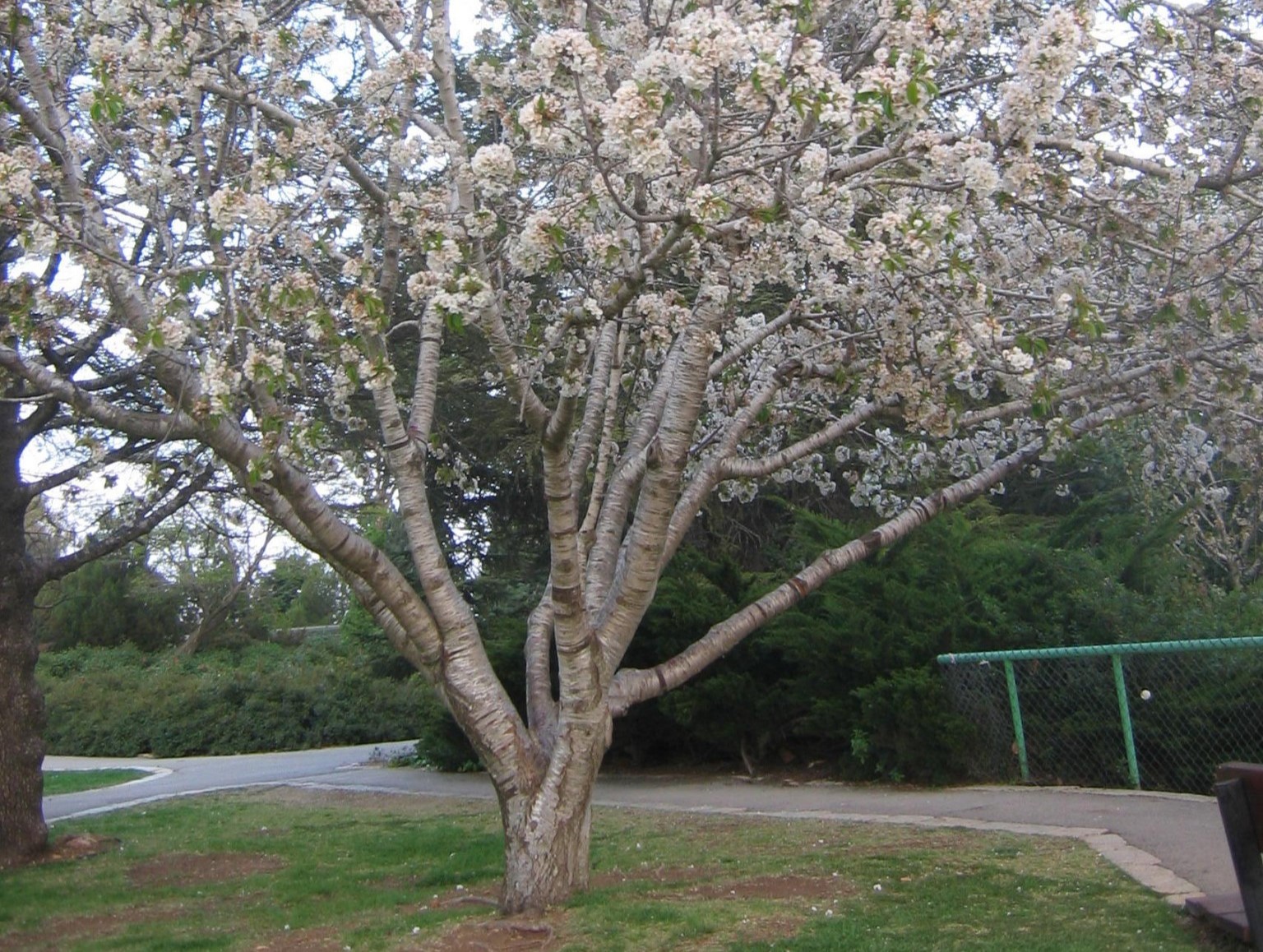
In good conditions they will grow to a height of 5-8 meters, develop a beautiful silvery trunk and produce an abundance of paradise fruits almost every year depending on the amount of cold in the winter. In our hot climate their life expectancy is about 20 years with good care, but in our opinion the beauty, spring flowering and fruits are worth the investment.
At our nursery, you can usually find the varieties 'Lapins', 'Stella', '17H', 'Rainier' and others, as well as the sour cherry 'Chios', which self-fertilizes well.
Winter is an excellent planting time and it is worth remembering that planted sweet cherries will only begin to bear fruit in 3-4 years. The sour cherry will be about two years ahead of them.
but patience certainly pays off.
לקריאה על גודגדן –דובדבן מתוק בעברית לחצו כאן